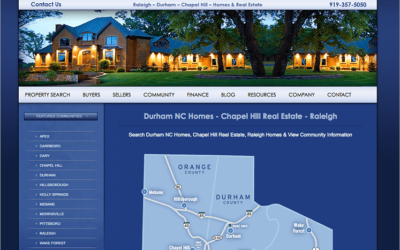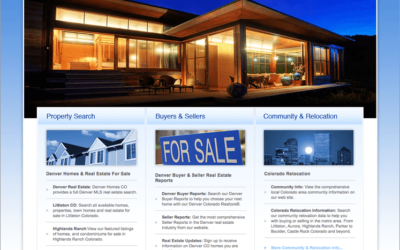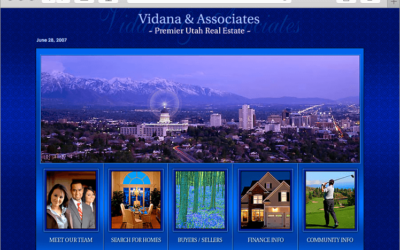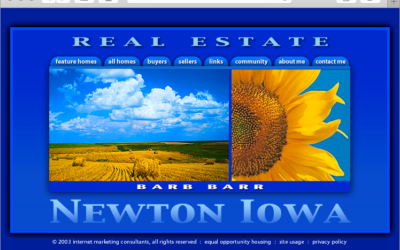
Real estate website design pros have Internet marketing skills similar to a real estate agent’s ability to handle closing emergencies and have in-depth knowledge of the current market conditions and competition.
The closing emergencies. Handling the last minute problems that can hold up or torpedo a home closing is one of the areas where real estate professionals’ experience often averts or solves untimely problems. The critical “H hour” for your real estate website is when it is launched or when it is updated. With so many ingredients, such as images, external links, internal links and navigation, surprises do crop up that demand immediate attention. Similar to a Navy ship’s shakedown cruise, even with all systems tested, the real life interaction of the systems is the real functionality test.
Current market conditions and competition. This is where your real estate website professionals shine. In advertising, music and art there is an age-old history of “Borrow the best and drop the rest”. That, in a very small nutshell, is the art of working with search engine optimization, keyword optimization, finding niche market keywords, organizing content, polishing the graphical presentation and producing a finished product. Then the follow through to check how the real estate website moves up in the search engines rankings, captures website visitors’ interest, and creates warm real estate leads for the agent.
Fast-track your lead-building Internet marketing. Contact a professional real estate website developer, such as Internet Marketing Consultants, to get your real estate website actively ranked and powerfully building your personal real estate professional brand. Your wonderful family members who help you spend your income will love you for it.
Apr 24
Let’s take an argument for using a professional real estate agent and see if it also applies to using a professional real estate website developer for that agent’s personal website. Number one reason to use a real estate agent: they know the real estate business, the paperwork pitfalls, the staging nuances, the closing emergencies, the pricing versus appraisal scenarios and most of all the current market conditions and competition.
Selling real estate demands one set of skills, creating a real estate website demands a completely different set. There are individuals that can master both sets of skills and use them. But they probably don’t have much free time. Looking at the above list of real estate knowledge, they correspond in some ways to real estate website development.
Handling the paperwork. Hosting a real estate website, like handling a home sale’s paperwork, doesn’t demand a large amount of time, but it does demand experienced knowledge. A professional website developer’s hosting ability also demand in-depth knowledge of the activity. Knowledge of structuring and maintaining firewalls to block unwanted intrusions, setting up the email for the website, and understanding the posting of the website’s folders and files and the setting of file permissions.
The staging nuances. Just like staging a house to look its best and most attractive, website developers are very practiced in making an image, whether of the house or the real estate agent, look its best. In the credibility guidelines of a website, consider the agent photo as one of the key selling points. Old, grainy or poorly set photos do not add to the “professional” branding momentum a website is intended to create. [Note: Never have your photo staged outside a mobile home unless that is your niche market.] Professional website developers screen your photos to make sure you are starting with an agent image that has the necessary sharpness of detail for publishing on a website. Good starting images can then have the lighting and color problems corrected so the agent appears in their best light.
The other aspect of staging on the website is the content. Website developers also use professional writers since the way the content is presented is crucial to getting website visitors to read it. Getting the search engines to index the content gets a website ranked, but getting visitors to read and be impressed by your website’s content gets you warm real estate leads.
Next, real estate closings, conditions and competition in website design.
Apr 23
Apr 22
Plan your real estate agent photo just like you figure out how best to stage a house for sale. Your image as a professional real estate agent can be tremendously reinforced or seriously undermined by your agent photo. Here are several tips on maximizing your “image opportunity”.
1. Do not skimp, go professional.
Check the work of photographers in your area and choose one that has a solid track record for professional presentations. Resist the temptation to simply use the home photo from last September when your tan was at its healthy peak. Get digital copies of the pictures. Professional photographers have the lighting set up so there are no shadows on the wall behind you giving you that mug shot look.
If at all possible, do not use a photo digitized by scanning from a small photo print. This severely limits the ability of a web developer to fix any color or lighting issues and often creates imagery problems in themselves. Scanned photo prints often can appear on the website as grainy “yearbook” quality images.
2. Check your background.
Make sure it is not busy and that the backdrop color complements your clothing color. Wearing a dark suit against a black background often creates problems with having the agent stand out. You do not want an image of the real estate agent who is emerging from the shadows.
3. Be aware of outdoor photos.
The background of outdoor photos is often too busy. Nature has two tricks to impair your photos. First, the sun’s bright lighting often caused darker shadows around the eyes and chin. These shadows don’t seem so apparent outside, but when you review the image, you are struck by how recessed your eyes seem. Second, the wind ruffles hair, skirts and loose ties.
4. Dress for success.
Even if in your regular working environment you dress in casual business clothes to set your real estate clients at ease, for your professional branding, a more formal appearance projects a better image. Make the most your photo shoot and take several sets of clothes with different color schemes. For men, this may just be using different ties. With different color schemes in your clothes, you have more choice in photos to go with your website’s color scheme. If you run several websites, some just for individual properties, you have greater latitude in how you are presented.
5. Smile!
Apr 21
Your real estate USP, unique selling proposition, is that foundational statement that sets your real estate agency separate and apart from the broad market of real estate agents. With Internet marketing, your real estate website should reinforce your USP branding. If you do not have a USP yet or wish to refine yours so it has greater impact, veteran marketers give the following points for USP development.
A USP is a market positioning statement that consists of three segments: a product or service, an offer (preferably an irresistible offer) or promise of performance, and a guarantee. Essentially you are creating the justifiable reason to buy your real estate services.
The USP runs with permeating your passion in your website in that the first step is to match your real estate strong points with the market’s pain point. To paraphrase business systems consultant, Gerry Kendall, “What problem do your clients in the real estate market have that no one is addressing?” Answering this question takes some introspection as to how you are the same as the industry and in what way you can change to meet an unanswered need in the industry, possibly even creating and carving out a new niche market for yourself.
Once you arrive at your USP, make sure it permeates your Internet and traditional marketing and any staff training. It doesn’t do any good to promise prompt attention if your staff delays returning phone calls and emails.
Use your USP to fine tune your real estate website. Make sure your some of your testimonials reinforce the message that you deliver on your USP promise. Testimonials are the third party proof that you fulfill your advertising claims.
Why is it important to know the pain points of a real estate transaction? Because people are willing to pay you solve pain points. Since real estate can be seen as a commodity, tailoring a USP on “low prices” only ensures your love/hate relationship with your credit card. Solving a pain point lifts your real estate marketing proposition from helping buy a house to a wider field of helping someone find a solid and safe foundation for their family’s quality of life - proximity to schools, playgrounds, and outdoor activities.
Now, one last step in developing your USP. Test it out. Run it by people you know are honest and straightforward (or rude and incisive like teenagers). Take in their input and reactions or lack of reactions to refine it. As one marketer advised “Make it brash, love you or hate you, the market will never forget you. Anonymity is equal to oblivion in the market.”
Once tested and found to cause positive reactions, go full speed ahead and use it as a primary driver on your real estate website and in reaching your niche market. A good real estate website design has the design and graphic features ready to place your branding USP in memorable ways to your website visitors.
Apr 18
2008 is the year real estate marketing dollars pour more into Internet marketing and less into newspapers. It almost happened in 2007 with newspapers retaining about 36% of the marketing budget (yet declining) and real estate Internet marketing increasing to 33%.
This trend reflects the increase in real estate clients reached through the Internet. Real estate Internet marketing has already eclipsed the walk-in market. As the National Association of Realtors reported, almost 80% of homebuyers start their search on the Internet. Part of the equation is that newspapers get updated once a day, real estate websites can be updated quickly as new property becomes available. Home buyers and sellers are always interested in the most up-to-date market information.
As Stefan Swanepoel points out in his research on the 2008 real estate trends, this marketing shift means that “as a very general rule, agents need to ensure that their websites are ’sticky.’ In short that means that real estate websites need to be:
From a look at Swanepoel’s short list, two strategic steps stand out:
When entering or seeking to be competitive in the Internet marketing arena with your real estate website, rely on a website design professional such as Internet Marketing Consultants. Just like it is wise for home buyers and sellers to rely on a real estate professional such as you.
Apr 17
When honing your real estate website on a target real estate market, take into account Generation Y. Generation Y is the 18 to 30 year olds who pose a doubly potent market for real estate agents utilizing real estate websites to garner greater market share. National Association of Realtor’s Senior Research Analyst Jessica Lautz recently checked the home buying statistics on this age group and found why they are such a potent target market.
More than any other age group, 82% of Gen Y home buyers used a real estate agent in their purchase. Most of them were first-time home buyers. Interestingly, most of them viewed their home as a better store of wealth than the stock market and paid attention to both the quality of the house and the quality of the neighborhood.
What is best for real estate agents with websites is that 36% found their home on the Internet and another 35% found their home through their local Realtor. Jessica Lautz points out “These unique home buyers are the youngest of the home buying segment, and are the most likely to purchase a home in the next two years in comparison to any other age group.”
Oh yes, the average income for these first-time home buyers is $61,000. They get most of their information through the Internet, want to use a real estate agent and are ready to invest in their own home. Is your real estate website targeting this potential market?
Apr 16
In the first 5 guidelines of establishing website credibility, the personal aspect of your real estate website was examined. We examine the credibility factor in your overall website design in the final 5 guidelines.
6. Design your real estate site so it looks professional and is appropriate for your real estate market.
One of the biggest factors is a website visitor’s initial Go-Nogo decision is the look and feel of the design. Internet Marketing Consultants (IMC) has studied the effects of real estate website design, from the type, size and number of graphics, the typography, the overall color theme of a website’s design, the design’s consistency, to the balance of navigation items and content. IMC’s real estate websites strike a proven effective balance between the design presentation and the design content that perfectly serves the real estate market.
7. Make your site easy to use — and useful.
This is really 7A Easy to use and 7B Useful. Easy to use is based on the clarity of the navigation and the ability to reach any page in 2 to 3 clicks. Useful means your content serves your client’s needs, gives them the information they need, and doesn’t force them to go elsewhere to find all the information they need to make a decision. IMC designed sites avoid the graphic artist’s trap of providing very artistic sites filled with Flash slide shows, but that fail to deliver basic information necessary to make real estate buying and selling decisions.
8. Update your real estate site’s content often.
Nothing makes people wonder is you are still in business like a website that has not been updated. Make sure your listings are up to date. IMC’s real estate websites designs include Neighborhood News tools for adding newsworthy articles and real estate blogs that allow real estate agents to update their sites without taking a large amount of time from their busy week.
9. Use restraint with any promotional content such as banner ads and offers.
Granted banner ads have been touted as a great second income stream. But the purpose of a real estate website is to sell your real estate agent services and promote your listings of homes for sale. Popups, banners and various offers detract from your main message and one lost potential client may lose you more than any banner revenue will bring in over the course of a year. Restraint also applies to writing style - honest, clear and direct are credible. Wordiness in the content and making large claims detract from your website’s credibility.
10. Last, but not least: Avoid all types of errors, no matter how small they seem.
A frustrated visitor is a gone visitor. Broken links are very frustrating. IMC websites are link checked prior to posting. A good place to start checking your real estate website’s links are any government links. Just like the new Egyptian pharaohs and Roman emperors would quickly replace their predecessors statues with their own, government sites seem to follow the same pattern with website replacement and pay little attention to a link’s legacy out on the Internet. Also spell check your website. Experience has shown that the more creative and artistic a person is, the more they are apt to misspell words. Unfortunately website visitors interpret misspellings as lack of detail oriented thinking (needed in real estate contracts) and general sloppiness, not that you are a really creative real estate agent. And, as your sixth grade teacher told you so often, make sure your verb tenses match.
And most of all, under guideline #10, trust your website hosting to a reputable firm. People visiting your website finding it gone, or worse the domain name lapsed and was snatched up by a marketing company selling domain names is a bombshell in your marketing campaign.
Follow these guidelines and work with a proven real estate website design company to assure the success and credibility factors on your website.
Apr 15
With Internet marketing, establishing your credibility on your real estate website is of utmost importance. The nature of real estate website visitors is to move on to the next website if they do not quickly find what they are looking for or if their initial read of your website is negative.
The prestigious Stanford Persuasive Technology Lab has done research over the years and created their “Stanford Guidelines for Web Credibility” that affect your real estate website visitor’s assessment of your credibility as a real estate agent and realty company they want to work with. Internet Marketing Consultants (IMC), provider of top real estate websites, has found through their own research, that these guidelines prove very effective in retaining traffic on your website.
1. Make it easy to verify the accuracy of the information on your site.
IMC always encourages real estate agents to collect testimonials for use on the homepage and the “About Us” page. Nothing establishes your credibility like a third party endorsement. Any awards or certifications that have been received are also presented to the website visitor. Links to a third party site that boasts your accomplishments is a plus.
2. Show that there is a real organization behind your site.
Websites that do not present a physical address and a phone number that isn’t a toll-free number are immediately suspected of being scam websites. People always wonder why the organization is hiding. IMC designed real estate websites prominently post your real estate office’s physical address in several areas of the site. Links to your site from your listing in the local chamber of commerce also reinforce this guideline.
3. Highlight your real estate organization’s expertise in the content and services you provide.
One of IMC’s chief aims in their real estate design is to show the strengths of the real estate agent and their team throughout the website, not only in an About Us page, but in the expert reports that agents provide potential clients to educate them on real estate and mortgage transactions, as well as key information to help in getting a house ready for sale or what to look for when buying a house. IMC also follows the guideline of only linking to other trustworthy sites. IMC does not sign its clients up to directories that promise large exposure to the search engines, but end up costing clients search engine ranking due to the directory’s lack of credibility with the search engines.
4. Show that honest and trustworthy people stand behind your site.
IMC dedicates at least one page, and offers the opportunity for a more in-depth presentation, for the real estate agent’s biographies. Real estate is one of the most relationship-centered businesses. With such an important financial step, people want a very personal relationship with someone who will help them make decisions that will potentially affect their future happiness. Agent photos, like the old saying goes, are worth a million words.
5. Make it easy to contact you.
In real estate, you can never make it too easy for a potential client to contact you. IMC’s real estate website design makes sure that the real estate agent’s phone number is easy to find on every page of the website. IMC’s Contact Us page includes at least four ways to establish contact: phone number, physical address, fax number and an email address.
Next: Is your basic real estate website design conveying a high level of credibility?
Apr 14